Transition écologique

Le programme Transition écologique accompagne la réflexion et le dialogue autour des défis environnementaux et climatiques, en s'intéressant notamment aux systèmes alimentaires, à la transition énergétique, à la gestion durable des ressources naturelles et à la valorisation des connaissances locales.

Afficher cette page

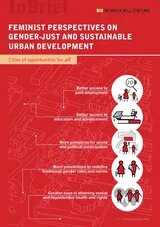
Feminist perspectives on gender-just and sustainable urban development

Published: 21 March 2022
Factsheet
Urbanisation is a defining characteristic of life across the globe in the 21st century. Cities offer many opportunities for different types of people to forge a livelihood and lead a fulfilling social life. The diverse options are taken up in particular by women and people who renounce traditional, binary gender roles and norms and are thus often subject to various kinds of discrimination.

Climate Finance Fundamentals 10: Gender and Climate Finance

Published: 30 November 2018
Women are often disproportionally affected by climate change impacts which aggravate existing gender inequalities and as a result of persisting gender norms and discriminations. Women and men also contribute to climate change responses in different ways.

Urban Planning Processes In Lagos

Published: 25 September 2018
The revised, second edition (2018) of “Urban Planning Processes in Lagos” is the result of a yearlong research process that examines the relation between urban policies, urban interventions, the role of governance, and the different actors in Lagos. The publication shows that Lagos urban policies do not often benefit those at the centre of economic development: the Lagosians – of which a significant number lives below the poverty line.

Policy Paper: Litigation (im)possible? Holding companies accountable for sexual and gender-based violence in the context of extractive industries

Published: 7 September 2015
Sexual and gender-based violence seems to be inherent in the surroundings of extractive projects. More than often, it is on the instruction of the mother companies in the global North that security forces commit atrocities and severe human rights violations in communities affected by extractive projects and very often sexual and gender-based violence are among them. How is it possible to hold the mother companies accountable? How can the intentionality and foreseeability of those crimes be proved? How do you find and secure evidence? What do non-judicial company grievance mechanisms do for the victims?